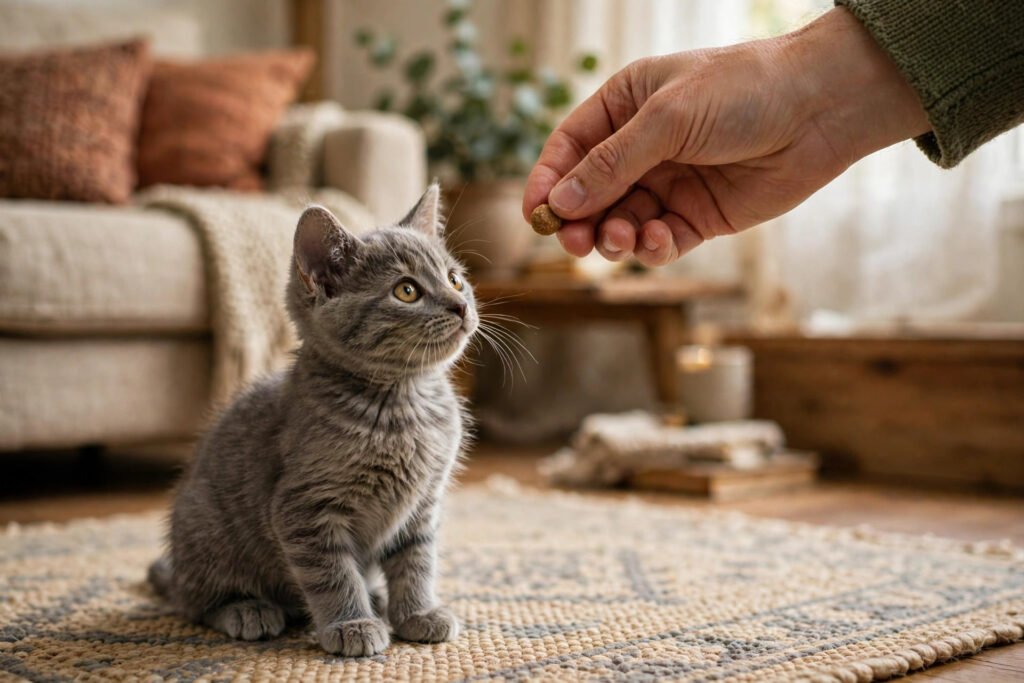
Every cat owner knows the look. You’ve barely opened the treat bag and there’s a small furry supervisor at your feet, supervising intensely. Treats are one of the great joys of living with a cat — training rewards, bonding moments, the occasional bribe after a vet visit. But there’s a question worth asking before the third handful of the day: how much of your cat’s daily food should actually be treats?
Quick Answer
Cat treats should make up no more than 10% of your cat’s total daily calories — this is the widely recommended 10% rule used by vets and pet nutritionists. The other 90% or more should come from complete, balanced meals. In practical terms: if your cat eats 250 kcal per day, keep every treat, topper, table scrap, and dental chew combined at or under 25 kcal. Ten percent is a ceiling, not a target — fewer treats is always fine.
What Counts Toward the 10%
Before doing the maths, be honest about what “treats” includes, because most owners undercount. Everything outside your cat’s measured meals goes in the treat column:
- Commercial treats of every kind — crunchy, soft, creamy tubes, dental chews
- Freeze-dried treats and meal toppers sprinkled on as extras
- Lick mats smeared with paste
- Table scraps and human food shared “just a bite”
- Pill pockets and other medication disguises
- Milk or cream offered as a treat
- Training rewards, however small
If it wasn’t weighed into the bowl at mealtime, it’s a treat. That strictness is what makes the 10% rule actually work.
Why 10% Is the Line
The 10% figure isn’t arbitrary. It comes from a simple nutritional reality: treats are not complete foods. Your cat’s main diet is formulated to deliver a precise balance of protein, fat, vitamins, minerals, and amino acids like taurine in every calorie. Treats are formulated to be delicious. Every treat calorie displaces a calorie of balanced food — and with it, a share of the nutrients your cat was counting on.
At 10%, the dilution is small enough that a good main diet still covers everything. Push past it regularly and the gaps start to matter. Taurine, for instance, supports heart and eye health, and cats can’t make enough of their own — a diet that’s 25–30% nutritionally empty treats is a diet missing a quarter of its taurine, calcium, and B vitamins, meal after meal, month after month.
Then there’s the weight maths, which is quietly brutal. An extra 25 kcal a day — five or six small treats — adds up to over 9,000 kcal across a year. Since roughly 7,700 kcal of surplus stores as a kilogram of body fat, that’s more than a kilo of extra weight per year: on a 4 kg cat, a quarter of their body weight. Obesity in cats is linked to diabetes, arthritis, and liver disease, and it almost always arrives gradually, one “harmless” treat at a time.
Working Out Your Cat’s Treat Budget
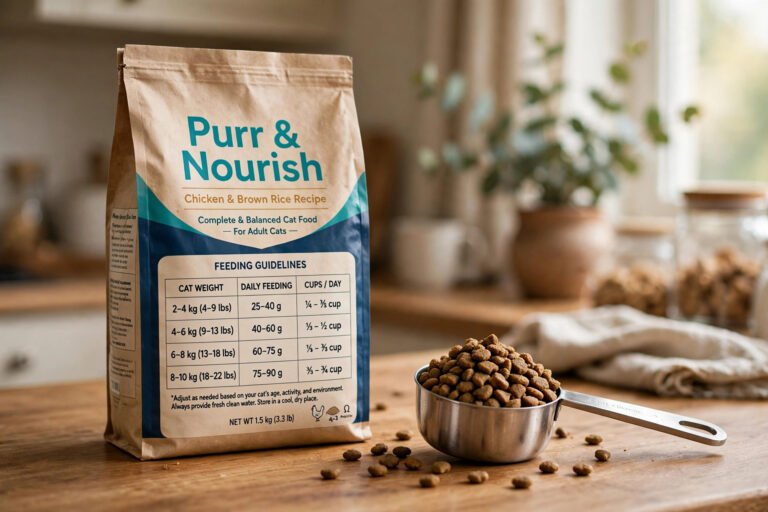
The calculation is simple: daily calories × 0.10 = treat budget in kcal. Use your cat’s daily calorie target — the figure from your vet or your food’s feeding guide — not a guess.
| Daily calories | 10% treat budget | What that looks like (at ~3 kcal/treat) |
|---|---|---|
| 200 kcal | 20 kcal | 6–7 small treats |
| 250 kcal | 25 kcal | 8 small treats |
| 300 kcal | 30 kcal | 10 small treats |
| 350 kcal | 35 kcal | 11–12 small treats |
To translate “25 kcal” into actual treats, check the packet: many brands print kcal per treat. If yours only lists kcal/kg, weigh one treat on a kitchen scale and divide the label figure by the weight — the same per-piece maths you’d use for any calorie-dense treat. Once you know the per-treat number, the budget becomes a simple count for the day.
Want the full-day picture alongside the treat maths? Our cat feeding calculator helps you plan meals and portions together, so treats stay in their lane instead of quietly taking over.
When to Stay Well Below 10%
Ten percent is the general ceiling. Some cats need a stricter one:
- Overweight cats: if your vet has your cat on a weight-loss plan, treats may need to drop to 5% — or pause entirely until the weight is back on track. This is the single most common vet recommendation owners quietly ignore.
- Kittens: growing bodies need every calorie to be complete and balanced. Keep treats to a couple a day for training and socialisation; the growth formula is doing the heavy lifting.
- Seniors with kidney disease: prescription kidney diets work by tightly controlling protein, phosphorus, and sodium — random treats can undo exactly what the diet is doing. Check with your vet before offering anything off-plan.
- Cats with allergies or digestive trouble: many treats contain chicken, fish, or grains — the most common feline triggers. A “harmless” treat can restart a flare-up you spent months calming down.
The One Exception Worth Knowing: The Kibble Trick
Here’s a trick trainers love: measure out your cat’s full daily food portion in the morning, then set aside about a tenth of the kibble in a treat pouch. Use those pieces as rewards throughout the day.
These “treats” cost zero extra calories — they’re already part of the measured meals — so they never touch the 10% budget. The cat still gets the training reps, the bonding, and the dopamine hit of earning a reward. It works best with dry food, and it’s the closest thing to free treats that exists.
Five Habits That Keep Treats in Bounds
- Pre-portion each morning. Count the day’s treat allowance into a small jar or pouch. When it’s empty, treats are done — no matter how convincing the staring is. This single habit beats willpower every time.
- Break treats smaller. A freeze-dried cube snaps into three or four training rewards. Cats respond to the frequency of rewards, not their size — four tiny wins beat one big one.
- Choose small, single-ingredient treats. A 2–3 kcal freeze-dried piece stretches the budget three times further than a 10 kcal creamy tube. Check kcal per treat before you buy, and favour brands that print it.
- Count the whole household. The classic budget-killer is three family members each giving “just a couple”. One jar, one person in charge of it.
- Log for one week. Jot down every treat for seven days. Almost everyone is surprised — usually by 50% or more. You only need to do it once to recalibrate your instincts.
Signs Treats Have Crept Past 10%
- Weight creeping up between vet visits, or the ribs getting harder to feel
- Meals left unfinished, but enthusiastic begging for treats
- Treats appearing “between meals” from multiple family members
- Your cat holding out at mealtimes — skipping balanced food in hopes of something better
None of these mean treats are the enemy. They mean the ratio has drifted, and a week of the jar method usually fixes it.
The Bottom Line
The 10% rule is beautifully simple: treats are the garnish, never the meal. Keep every extra — treats, toppers, scraps, chews — under a tenth of the day’s calories, count the whole household’s contributions, and use the kibble trick when you want to train generously. Your cat keeps all the fun of treat time, and their balanced diet keeps doing its quiet, essential work underneath.
[…] training treats small and count them as part of your cat’s daily food. Our guide to how many calories cat treats should make up per day shows how much you can safely […]