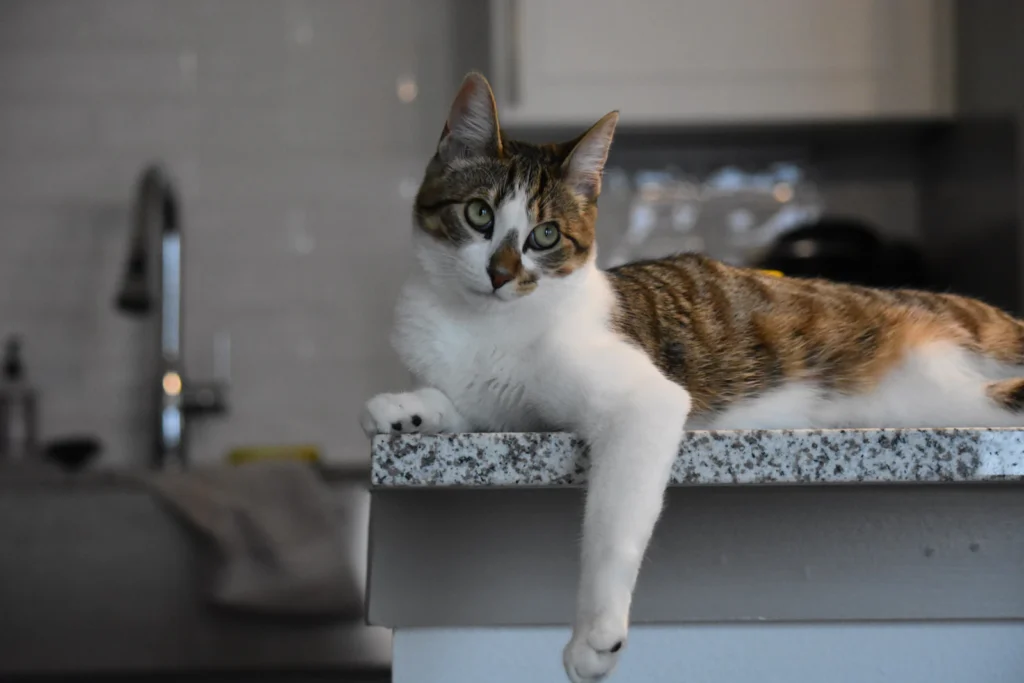
To stop a cat jumping on counters, take away the reasons they go up there and give them something better nearby. Keep worktops free of food, give your cat a tall perch or cat tree in the kitchen, reward them every time they use it, and make the counter less interesting with temporary deterrents like double-sided tape. Most cats change their habits within a few weeks.
Shouting or spraying water rarely works for long and can damage your cat’s trust in you. The approach below works with your cat’s instincts instead of against them. Our cat training plan generator can turn it into a short daily routine.
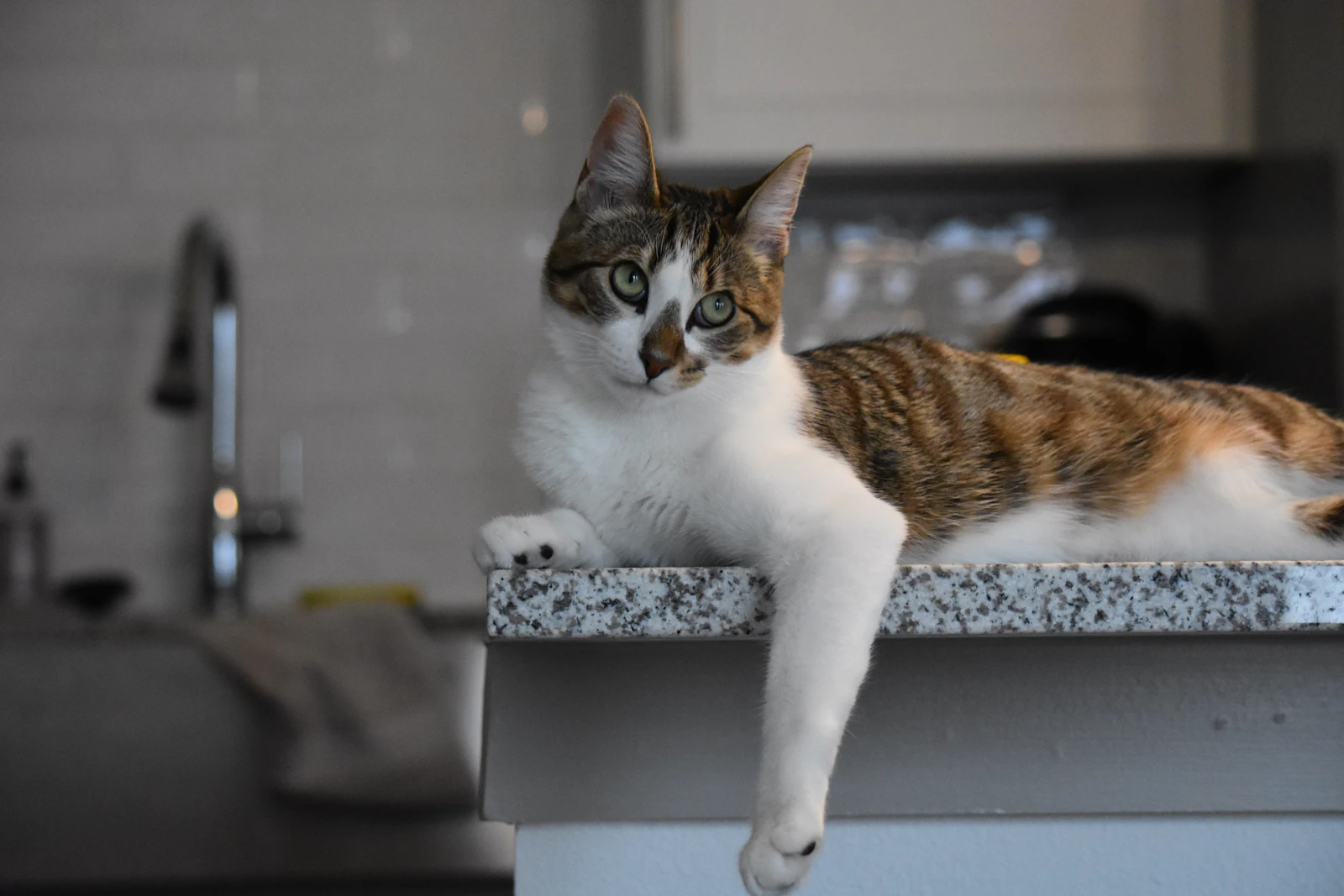
Why cats jump on kitchen counters
Understanding the reason makes the fix much easier. Cats go up on worktops because:
- Height feels safe. Cats like to watch the room from above. A counter is often the highest flat surface in the kitchen.
- Food smells and crumbs. Even a single crumb or a lick of butter left behind turns the counter into a reward.
- Running water. Many cats love a dripping tap or the sink.
- Attention. If your cat gets noticed every time they jump up, even with a “no”, that attention can keep the habit going.
- Boredom. An under-stimulated cat explores more, and the kitchen is full of interesting smells.
Most cats are doing more than one of these at once, so the best results come from tackling several causes together.
Step 1: Remove the rewards
Start with management. If the counter stops paying off, your cat has less reason to keep checking it.
- Wipe worktops after cooking and eating, so no crumbs or smells are left.
- Put food away immediately, including bread, butter, fruit bowls and pet food.
- Don’t leave plants, mail or small objects that are fun to bat around.
- Fix dripping taps, and offer a water fountain on the floor if your cat loves running water.
- When you are out, close the kitchen door or keep your cat in another room with food, water, a tray, toys and a perch.
Step 2: Give your cat a better high spot
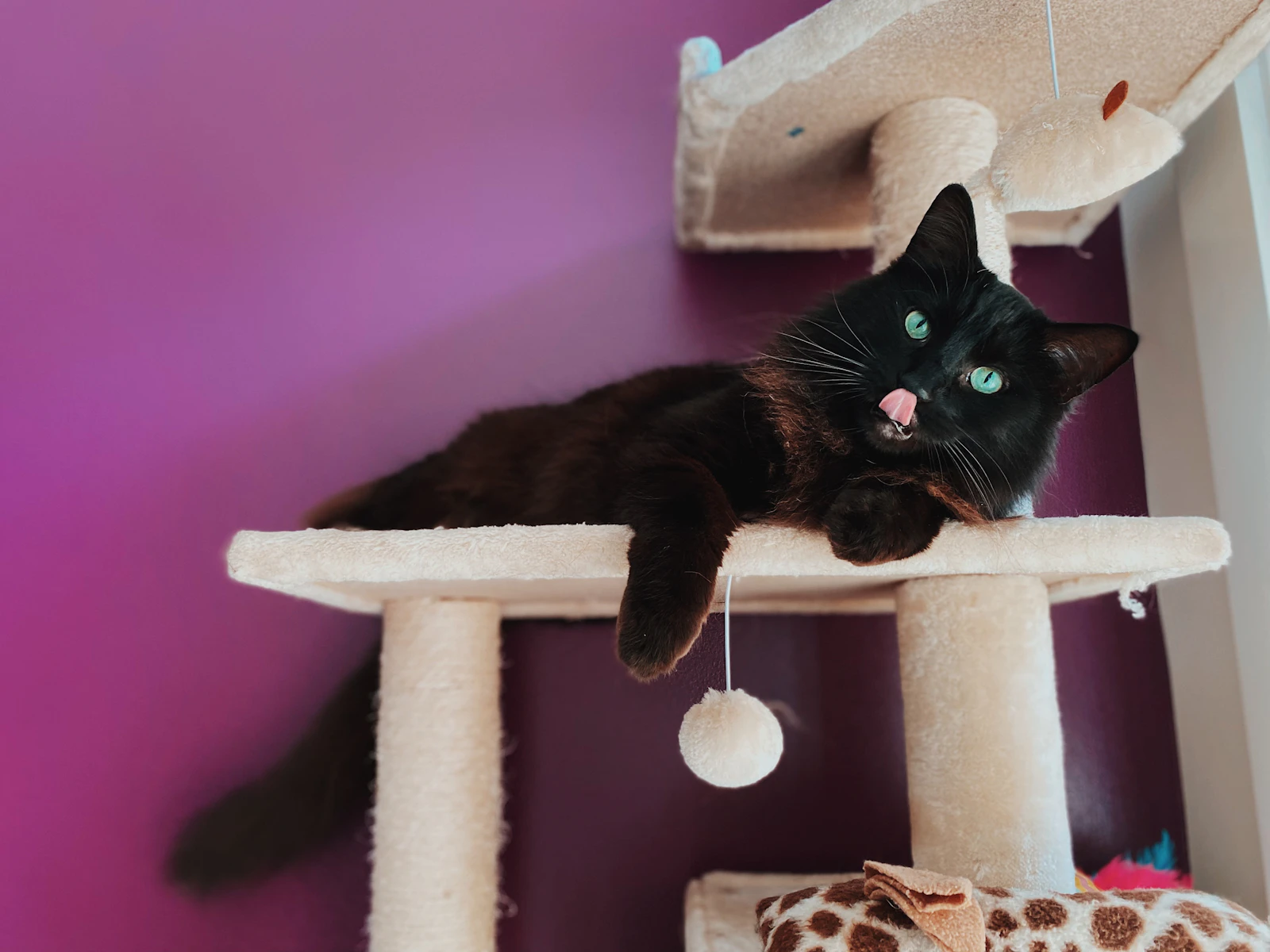
Your cat’s need to climb and watch doesn’t go away, so give them a legal option. Place a cat tree, a sturdy shelf, a window perch or even a bar stool with a soft blanket close to the counter, where your cat can still see what is happening.
The new spot should be at least as appealing as the counter: a similar height or higher, stable, comfortable, and with a view of you cooking.
Step 3: Reward the perch, every time
Cats learn quickly when good choices are rewarded.
- Put a few treats or a favourite toy on the new perch.
- When your cat jumps up there, praise them quietly and give a treat or a stroke.
- If you find your cat on the counter, calmly lift them down and place them on the perch, then reward them once they settle there.
- Repeat consistently, especially while you are cooking, which is when cats most want to be involved.
- Gradually reduce the treats as the perch becomes a habit, but keep praising.
If your cat already knows a target or a “sit”, you can use it here: ask them to touch the perch or sit on it, then reward. See how to teach a cat to touch a target and how to teach a cat to sit.
Keep training treats small and count them as part of your cat’s daily food. Our guide to how many calories cat treats should make up per day shows how much you can safely use.
Step 4: Make the counter less appealing
While the new habit forms, it helps to make the counter feel unpleasant to land on, without involving you. Animal welfare organisations such as the Wisconsin Humane Society recommend these as a last resort, used alongside the steps above:
| Deterrent | How to use it | Notes |
|---|---|---|
| Double-sided sticky tape | Stick sheets along the counter edge where your cat lands | Cats dislike sticky paws; remove once the habit fades |
| Aluminium foil | Lay loose sheets across the surface | The crinkle and feel put many cats off |
| Placemats or trays | Cover the landing area with something that moves slightly | Cheap and easy to remove |
Use deterrents for a few weeks, then remove them gradually. If your cat goes straight back up, return to rewarding the perch more often.
Step 5: Add play and enrichment
A bored cat finds its own entertainment, and the kitchen is often it. Two or three short play sessions a day, each 10–15 minutes, with a wand toy or something to chase, use up energy and reduce counter-surfing. Food puzzles and scatter-feeding part of their daily ration also give your cat something to do instead of exploring worktops.
Planning meal times around your own routine can help too. A cat that knows food arrives at set times is less likely to search the kitchen for it. Our cat feeding schedule generator builds a simple timetable.
What not to do
- Don’t spray water or use loud noises. These can frighten your cat, damage trust and simply teach them to jump up when you are not watching.
- Don’t use shock mats, spiked mats or air-burst sprays. Welfare groups advise against them because they cause stress.
- Don’t keep scolding and lifting them down without a reward elsewhere. The attention alone can keep the habit going.
- Don’t leave food out “just this once”. Even an occasional success makes the habit harder to break.
How long does it take to stop counter jumping?
With consistent management, a good alternative perch and regular rewards, many cats spend much less time on counters within two to three weeks. Older cats with a long-standing habit may take longer. Consistency from everyone in the household matters more than any single trick: if one person lets the cat sit on the worktop, the training slows down.
Is it a hygiene problem?
Cat paws walk in litter and outdoors, so it is sensible to keep cats off food-preparation areas. Clean worktops with a food-safe cleaner before cooking, especially while you are still training.
Is your cat hungry or bored?
Some cats keep raiding the counter because they are genuinely hungry between meals, or because their meals are too predictable and spaced too far apart. Check you are feeding the right amount for your cat’s size and activity; our cat calorie calculator gives a starting point. Splitting the daily ration into more, smaller meals, or putting part of it in a puzzle feeder, keeps your cat busy and satisfied, which reduces food-seeking on worktops.
A sudden increase in counter jumping, especially with more begging, thirst or weight loss, can be a sign of a medical problem such as an overactive thyroid. In that case, a vet check comes before training.
Training tips for multi-cat homes
In homes with several cats, counter surfing often spreads, because one cat learns from another and the most confident cat claims the best high spot. Give each cat its own perch, so no one has to compete for the cat tree. Feed cats in separate spots so a cat that eats quickly can’t finish its own bowl and then go looking for more on the worktop. Reward each cat individually when they choose a perch instead of the counter.
A simple one-week starter plan
- Day 1: Clear and wipe all worktops; set up a perch next to the counter.
- Days 2–3: Put treats on the perch several times a day and reward every visit.
- Days 4–5: Add sticky tape or foil to the main landing spots on the counter.
- Days 6–7: Add an evening play session and keep rewarding perch use while you cook.
Keep going for at least two more weeks before removing deterrents.
Frequently asked questions
What smells keep cats off counters?
Many cats dislike citrus smells, but scent deterrents are unreliable and some essential oils are toxic to cats. Physical deterrents such as sticky tape or foil, combined with a rewarded perch, work more consistently.
Can you train an older cat to stay off the counter?
Yes. Older cats can learn new habits, although it may take longer. Remove food rewards, provide a comfortable perch nearby and reward them every time they use it.
Should I use a spray bottle to stop my cat jumping on counters?
No. Spraying water can make your cat fearful of you and usually only teaches them to avoid the counter while you are watching.
Why does my cat only jump on the counter when I am cooking?
They want to be near you and the food smells. A perch next to the cooking area with a view of you, rewarded with attention, usually solves this.
Do cat trees really help with counter surfing?
Yes, if the tree is tall, stable and placed in or near the kitchen. Cats want height and a view, and a good cat tree offers both.



[…] read how to kitten-proof a living room. If climbing extends to kitchen worktops too, our guide on how to stop a cat jumping on counters uses the same redirect-and-reward […]