
To introduce a cat to a dog, keep them apart at first, swap their scents, then let them see each other through a baby gate with the dog on a lead. Reward calm behaviour from both, keep early meetings short, and make sure the cat can always escape to somewhere high or dog-free. Most cats and dogs need at least a week, and often several weeks, before they can share a room safely.
Calm, trained responses from your dog make everything easier. If your cat is new to training too, our cat training plan generator can help you build confidence and good habits alongside the introduction.
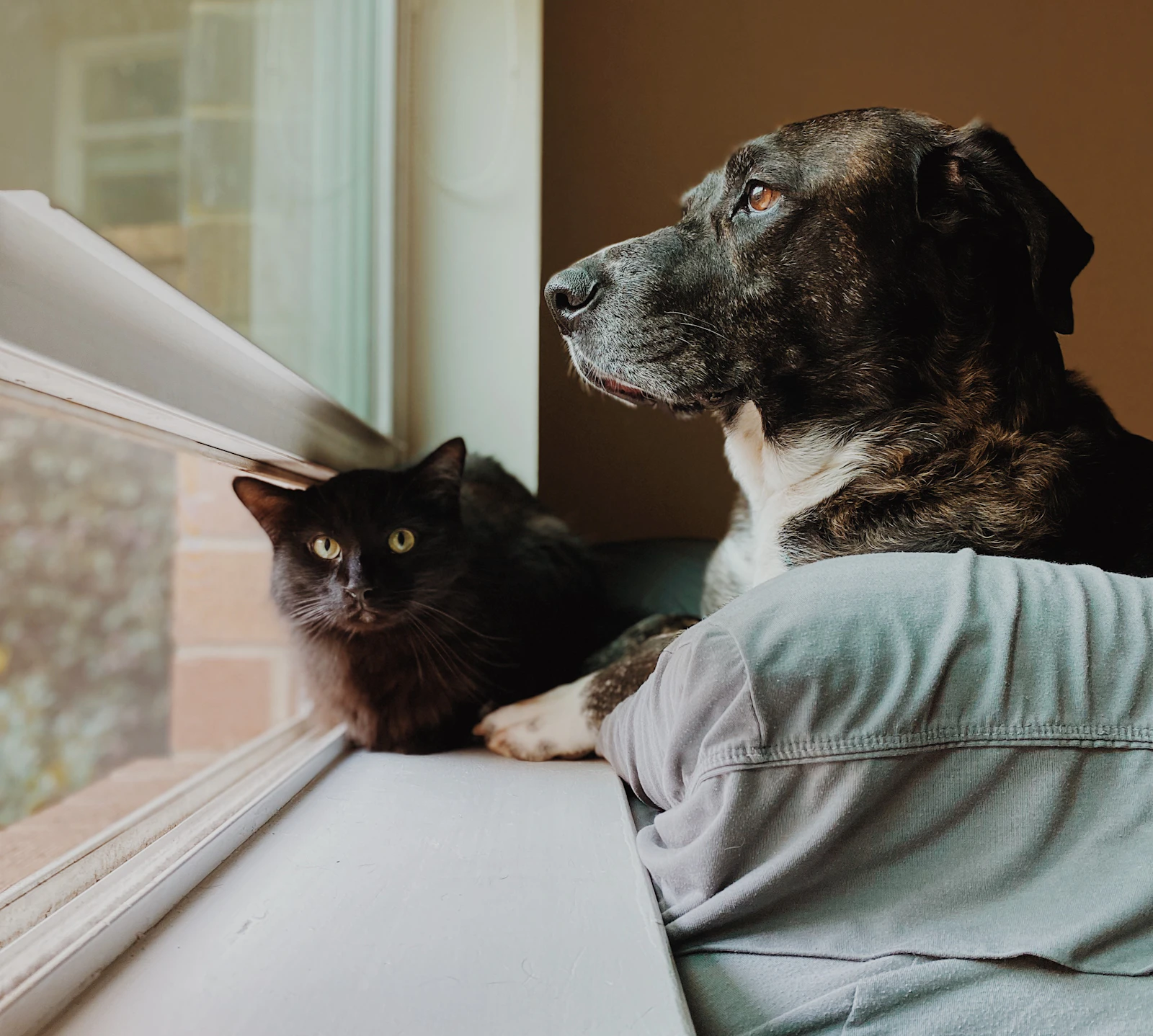
Before you start: is this a good match?
Not every dog can live safely with a cat. PDSA advises thinking carefully if your dog chases cats or small animals on walks, or has a strong prey drive. Breed plays a part, but so does the individual dog. If you are adopting, a rescue’s note that a dog or cat has been “cat tested” or “dog tested” is useful.
For the cat, PDSA suggests a calm, confident cat that is already relaxed around dogs is the best fit. Bringing a dog into the home of a nervous or easily stressed cat is a bigger risk.
Also check health first. PDSA recommends making sure both pets are fully vaccinated before they meet. PetMD suggests a vet check for a new pet and a few days of quarantine before introductions begin.
Prepare your home and your dog
A little preparation makes the first meetings much safer.
- Brush up your dog’s training. The RSPCA recommends reinforcing basic cues so you have good control, and notes that a crate-trained dog makes introductions easier and safer.
- Create a dog-free safe room for the cat. It should hold food, water, a litter tray, a bed, a hiding place and somewhere high to sit.
- Add high places everywhere. PDSA suggests cat trees or wall shelves so your cat can watch the dog from above. Height is how cats feel safe.
- Fit a baby gate. PDSA notes a gate can keep the dog out of the cat’s areas while letting the cat come and go.
- Separate food, water and litter. Keep the cat’s resources out of the dog’s reach. Dogs often eat cat food and raid litter trays.
Our guide to preparing a safe room for a new kitten works just as well for an adult cat meeting a dog.
Step-by-step: how to introduce a cat to a dog
- Keep them fully apart for a few days. Let the new pet settle in their own space. They will hear and smell each other through the door.
- Swap scents. PDSA suggests rubbing a cloth on your cat’s cheek and another on your dog, then placing each cloth in the other pet’s bed. You can also swap bedding, or let the cat explore the house while the dog is in another room, as the RSPCA suggests.
- Pair the other pet’s scent with good things. Feed meals or treats near the door or near the swapped bedding.
- Let them see each other through a gate. Keep the dog on a lead and at a distance. PetMD suggests a tall gate, or partly blocking the view if either pet gets very excited.
- Reward calm behaviour. Praise and treat your dog for looking at the cat and then looking back at you. Let the cat choose whether to come closer.
- Move to short meetings in the same room. Keep the dog on a loose lead, or crated, in a room the cat can easily leave. The RSPCA suggests short meetings several times a day.
- Stay on lead for a few weeks. The RSPCA expects a few weeks on lead before any off-lead time. PetMD suggests letting the dog trail a lead for a while once things are calm, so you can step in quickly.
- Reduce supervision slowly. Start by leaving the room briefly while staying within earshot. Keep them apart when you go out until you are confident.
Typical timeline
| Stage | Main goal | Rough length |
|---|---|---|
| Separate living | Both pets settle in | A few days |
| Scent swapping | Get used to each other’s smell | A few days |
| Gate introductions | See each other calmly, dog on lead | One to two weeks |
| Same-room meetings on lead | Calm behaviour with close control | A few weeks |
| Supervised off-lead time | Relaxed together, cat can always escape | Ongoing |
The RSPCA says the process takes at least a week and probably a few weeks. PetMD says it can take anything from a couple of weeks to a few months. PetMD also advises not setting a fixed deadline and stepping back whenever either pet seems stressed.
Body language: when to pause
Watch both animals closely. Ending a session early is always better than letting it go wrong.
| Animal | Signs of trouble | What to do |
|---|---|---|
| Dog | Staring fixedly, stiff or slow movement | Create more distance or take a break |
| Dog | Whining, lunging, barking, lurching to chase | Separate and go back a step |
| Cat | Crouching, freezing, ears flat, wide pupils | Give more space and let the cat retreat |
| Cat | Tail lashing, fur raised, hissing or growling | End the session calmly |
The RSPCA notes that some hissing and tail swishing are normal at first and usually settle within days. A dog that is fixated on the cat is a bigger worry than a cat that hisses.
Cats, kittens and puppies
Kittens are small, fast and fragile, so a boisterous dog can injure one by accident. Be extra strict about lead control, gates and supervision until the kitten is bigger and the dog is reliably calm.
Puppies are full of energy and have little self-control. The RSPCA suggests a puppy is crate-trained to make introductions easier. Short, calm sessions work better than long ones, and plenty of separate play for the puppy helps.
Adult cats need high escape routes most of all. A cat that can climb out of reach feels in control, and a cat that feels in control is less likely to lash out.
What not to do
- Do not just let them “sort it out”. An unsupervised first meeting can lead to injury or lasting fear.
- Do not hold the cat up to the dog. Restraining a frightened cat can get you scratched and makes the cat feel trapped.
- Do not punish either pet. The RSPCA advises against punishment. It adds fear and makes the other animal seem like bad news.
- Do not let the dog chase the cat, even in play. Chasing can quickly become a habit.
- Do not feed them side by side. PDSA advises keeping food areas apart, and notes that once the barrier is removed, treats can cause squabbles if both pets are close together.
- Do not leave them alone together until the dog is trained not to chase and both are calm.
Living together long term
Even after a successful introduction, keep a few rules in place:
- Your cat should always have a space the dog cannot reach, such as a gated room or high shelves.
- Keep cat food on a raised surface and litter trays where the dog cannot get to them.
- Keep up your dog’s training, especially a reliable “leave it”.
- Feed them separately. Our cat feeding schedule generator can help you plan cat meals at set times when the dog is elsewhere.
If your cat is anxious around the dog, building a calm recall can help you move the cat to safety without fuss. See how to train a cat to come when called. Carrier training also helps for vet trips in a busy home: how to train a cat to enter a carrier.
When to get professional help
The RSPCA recommends a trained behaviourist if introductions are not going well or either animal seems stressed. PDSA suggests speaking to your vet, who can refer you to a veterinary behaviourist if your pets really do not get along. PetMD adds that a qualified positive-reinforcement trainer can help if you feel out of your depth.
Get help sooner rather than later if your dog repeatedly lunges at the cat, or if your cat stops eating, hides all the time or starts toileting outside the tray.
Frequently asked questions
How long does it take for a cat and dog to get along?
Usually at least a week and often a few weeks. Some pairs take a few months. Go at the pace of the more anxious animal.
Should the dog be on a lead when meeting the cat?
Yes. Keep your dog on a lead, or crated, for early meetings and for a few weeks after, so you can stop any chasing straight away.
Is it normal for my cat to hiss at the dog?
Some hissing and tail swishing are normal at first and often settle within days. Give your cat space and somewhere high to retreat to.
Can any dog live with a cat?
No. Dogs with a strong prey drive, or that chase cats on walks, may never be safe with a cat. Speak to a behaviourist if you are unsure.
Can I leave my cat and dog alone together?
Only once your dog reliably ignores the cat, both are relaxed together, and the cat can always reach a dog-free space. Until then, separate them when you go out.



Discussion