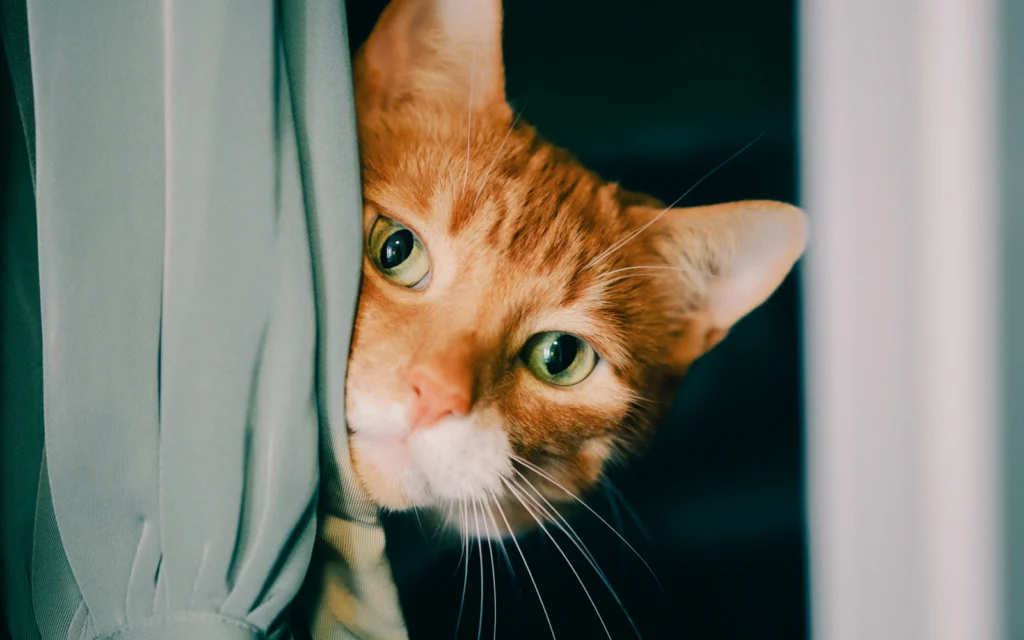
To stop a kitten climbing curtains, give them better places to climb, such as a cat tree and wall shelves, play with them every day to burn off energy, and make the curtains harder to reach by tying them back or limiting access to rooms with long drapes. Never punish your kitten. Climbing is natural, so the goal is to redirect it, not stop it.
Kittens climb curtains because they are bored, curious and full of energy, and long fabric is an easy route up. With the right set-up, most kittens lose interest in the curtains within a few weeks. To plan the kit you need, try our new kitten checklist generator.
Why kittens climb curtains
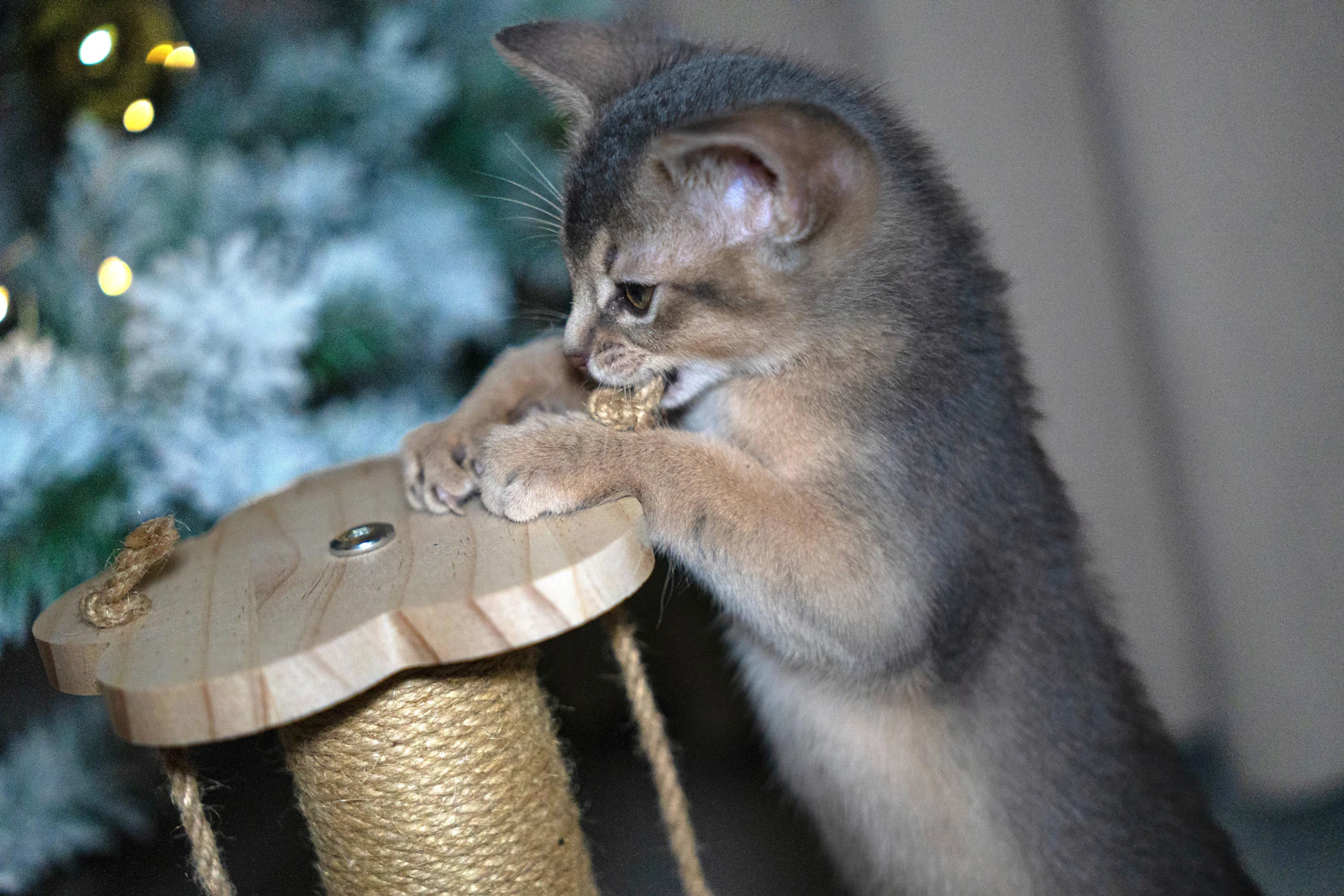
Cats are built to climb. In PetMD’s guide, a veterinary behaviourist explains that cats’ bodies are made to use vertical space as much as floor space. Outdoors, they climb to find safe spots, scan their surroundings, hunt and simply have fun.
The main reasons a kitten heads for your curtains are:
- Boredom and energy. PetMD notes that kittens often climb curtains out of boredom. Young cats need lots of activity.
- Safety and a good view. Cats are both hunters and hunted, so being high up feels safe. The RSPCA says cats often feel safest when they are high.
- Exploration. Everything in a new home is worth investigating, and curtains sway and move like prey.
- Grip. Fabric is easy to sink claws into, so it makes a perfect ladder.
- Wanting space. Stress, or simply wanting to be alone, can send cats looking for a high perch. In multi-cat homes, PetMD advises offering several surfaces at different levels.
Is curtain climbing dangerous?
Usually the curtains come off worse than the kitten, but there are risks. Claws can snag in loose weaves, curtain rails can be pulled down, and a kitten can fall from height or get tangled in cords. Keep blind and curtain cords tied up out of reach, and check that rails and poles are firmly fixed. The RSPCA advises keeping your home safe and hazard-free so your cat cannot injure themselves.
Step-by-step: how to stop a kitten climbing curtains
- Add a climbing alternative near the window. Place a sturdy cat tree right by the curtains your kitten targets. Cats often climb to look outside, so a tree with a window view gives them the same reward.
- Make the cat tree more exciting than the curtains. PetMD suggests putting a comfy resting spot at the top with favourite treats. Hang feather toys at different levels.
- Use catnip to draw them in. A little catnip on the cat tree or scratching post can encourage your kitten to explore it.
- Play every day. PetMD recommends playing with your kitten for a few minutes every day. Several short sessions with a wand toy work well for young kittens.
- Tie back long curtains. PetMD suggests tying curtains back or limiting access to rooms with long curtains. Shorter or tied-up drapes are far less tempting.
- Interrupt and redirect calmly. If your kitten starts climbing, call them or wiggle a toy towards the cat tree. When they use it, reward with a treat or praise.
- Close doors while you are out. Until the habit fades, keep your kitten out of rooms with long curtains when you cannot supervise.
Give your kitten vertical space
The best fix is a home with plenty of safe places to climb. A Cornell veterinary behaviourist quoted by PetMD says we need to think of our homes in three dimensions, not just floor space.
| Option | Why it helps | Tip |
|---|---|---|
| Tall cat tree | Gives a safe, stable climb with a view | Put it beside the window your kitten loves |
| Wall shelves | Creates a climbing route around the room | Space them so your kitten can jump safely between levels |
| Window perch or hammock | Rewards the urge to look outside | Fix it securely so it does not wobble |
| Scratching post | Gives claws a proper outlet | Choose one tall and heavy enough not to tip |
| Cardboard boxes | Cheap hiding and climbing spots | Cut an entry hole and add a blanket |
PetMD also suggests budget options, such as a homemade cat condo from wood and carpet offcuts, or carpet squares fixed to a small step-ladder. You do not need to spend a lot.
Our guide on how to encourage a cat to use a scratching post helps you pick a post your kitten will actually use.
Play and enrichment ideas
A tired kitten is far less likely to scale the curtains. The RSPCA advises giving cats plenty to do, with space to exercise, climb and play, and notes that a bored cat is an unhappy cat.
- Wand toys. Drag a feather along the floor and up the cat tree so your kitten “hunts” in the right place.
- Treat hunts. PetMD suggests hiding treats in different spots around a climbing area.
- Rotating toys. Swap toys every few days so they stay new and interesting.
- A ball on a stick. PetMD mentions a feather or ball on a strong stick to copy the movement of prey.
- Short, frequent sessions. Kittens tire quickly, then recharge. Several short bursts a day suit them best.
If play turns into ankle attacks or nipping, see why kittens bite and how to stop it.
Kitten-proof the room
While your kitten learns, make the room less tempting:
- Tie back or loop up long curtains and voiles.
- Choose curtain fabrics with a tight weave if you are replacing them, as loose weaves snag easily.
- Tie up blind and curtain cords well out of reach.
- Move furniture that gives your kitten a launch pad to the curtain rail.
- Keep doors closed to rooms with floor-length curtains when you are out.
For a full room-by-room list, read how to kitten-proof a living room. If climbing extends to kitchen worktops too, our guide on how to stop a cat jumping on counters uses the same redirect-and-reward approach.
What not to do
- Do not punish your kitten. Both experts in PetMD’s guide say cats should not be punished for climbing. One warns that suppressing the behaviour can lead to aggression. The RSPCA also advises never using punishment such as shouting.
- Do not pull your kitten off the curtain. Claws can catch, which hurts your kitten and damages the fabric. Lift them gently by supporting their body, or lure them down with a toy.
- Do not take away all climbing options. Without a proper outlet, the urge will just move somewhere else.
- Do not leave dangling cords. They are a tangling risk for curious kittens.
- Do not rely on deterrents alone. A kitten with nowhere better to climb will keep trying.
A one-week plan
| Day | Focus |
|---|---|
| Day 1 | Tie back curtains and tie up cords. Close doors to rooms with long curtains. |
| Day 2 | Set up a cat tree by the main window. Add treats and a cosy bed at the top. |
| Day 3 | Start two or three short play sessions with a wand toy, ending at the cat tree. |
| Day 4 | Add catnip and a hanging toy to the cat tree. Reward every climb. |
| Day 5 | Add a second climbing spot, such as a shelf or window perch. |
| Day 6 | Practise calling your kitten down from the curtain to the cat tree with a toy. |
| Day 7 | Review: if the curtains are still the favourite, move the cat tree closer and add more play. |
Will my kitten grow out of it?
Many kittens climb less as they get older and calmer, but the urge to climb never fully goes. PetMD notes that the same approaches work for cats of any age, and that the only real limit is loss of agility in later life. Setting up good climbing spots now means your adult cat will use them instead of the curtains. To see how your kitten’s age compares in human years, try our cat age calculator, and read about what to expect at each stage in kitten development milestones.
Frequently asked questions
Why does my kitten climb the curtains?
Kittens climb because they are curious, bored or full of energy, and because being high up feels safe. Long fabric is an easy route to the top.
At what age do kittens stop climbing curtains?
There is no set age. Many kittens calm down as they mature, but climbing is natural, so give them a cat tree and shelves to use for life.
Do curtain deterrent sprays work?
They may help a little, but they will not stop climbing on their own. A better place to climb, daily play and tied-back curtains work far better.
Is it bad to tell my kitten off for climbing?
Yes. Punishment can make kittens fearful and even aggressive. Calmly redirect them to a cat tree and reward them when they use it.
What is the best alternative to curtains for climbing?
A tall, sturdy cat tree placed by the window, ideally with a perch at the top so your kitten can look outside.

Discussion