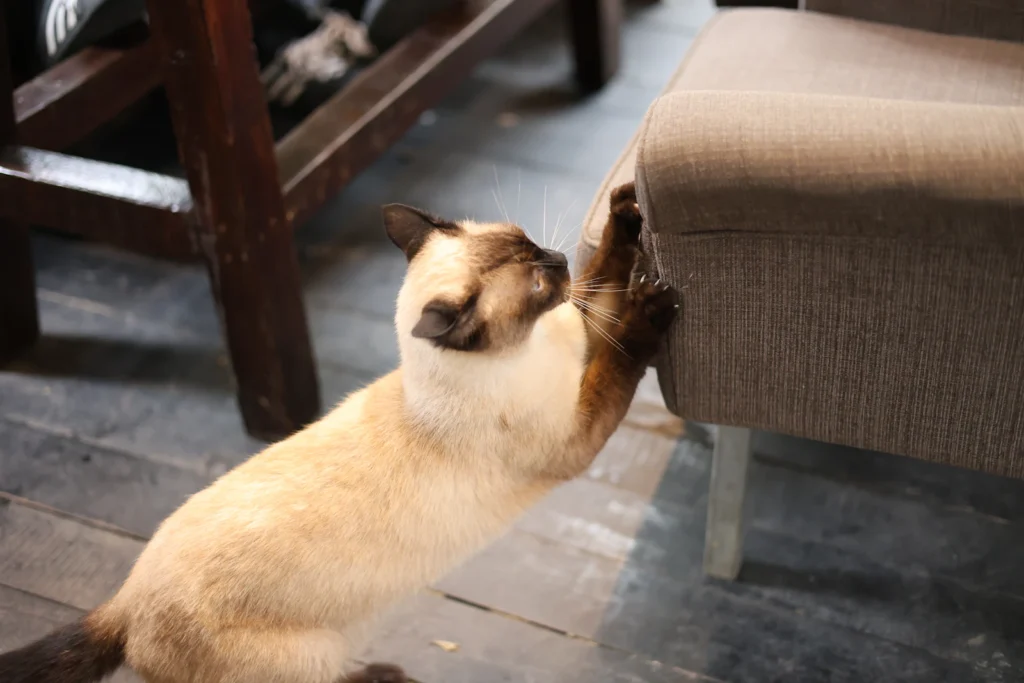
To stop a cat scratching furniture, give them a sturdy scratching post right next to the piece they target, make that furniture unappealing for a few weeks with covers or double-sided tape, and reward every scratch on the post. Scratching is normal, healthy behaviour, so the aim is never to stop it altogether. You are simply moving it from your sofa to something you are happy for your cat to shred.
This guide focuses on protecting your furniture while you redirect the habit. If you want a day-by-day plan to follow alongside it, our free cat training plan generator builds one around your cat’s age and the problem you are working on.

Why cats scratch furniture
Before you change the habit, it helps to know what your cat gets from it. Scratching does several jobs at once:
- Marking territory. Cats have scent glands in their feet. Scratching leaves both a visible mark and a scent message that says “this is mine”.
- Claw care. Dragging the claws through a rough surface pulls away the worn outer layer and keeps them in good shape.
- Stretching. A long vertical scratch stretches the back, shoulders and legs, which feels good after a nap.
- Letting off steam. Cats often scratch when they are excited, frustrated or stressed, such as when you come home or when another pet walks past.
PetMD notes that kittens start scratching from around 8 weeks of age. Sofa arms and unvarnished wooden table legs are common targets because fabric tears easily and soft wood gives a satisfying grip. RSPCA Queensland points out that cats naturally prefer vertical surfaces like tree trunks, which is why an upright chair or sofa side is so tempting indoors.
Step-by-step: how to stop a cat scratching furniture
Work through these steps in order. Most cats start to switch within a couple of weeks if the post is right and the furniture is temporarily off limits.
- Find out what your cat likes to scratch. Look at the damage. Vertical or horizontal? Fabric, carpet or wood? A cat shredding the side of the sofa wants a tall, upright post. A cat picking at the rug wants a flat scratcher.
- Buy or make a post that matches. It must be tall enough for your cat to stretch out fully and have a heavy, sturdy base so it never wobbles or tips. A post that moves will put your cat off for good.
- Put it right beside the furniture. Place a post next to each item your cat scratches, not tucked away in a spare room. Your cat chose that spot for a reason, often because it is on a busy route or near where they sleep.
- Make the post inviting. Rub catnip on it, run your fingernails down it to show the action, or dangle a wand toy so your cat’s claws catch the surface.
- Make the furniture unappealing. Cover the scratched area with a throw, plastic sheet or wide double-sided sticky tape while the new habit forms.
- Reward every scratch on the post. Give a small treat or calm praise the moment your cat uses it. Timing matters, so keep a few treats nearby.
- Remove the scent marks. Clean scratched areas with an enzymatic cleaner so the old scent message fades.
- Move slowly. Once your cat reliably uses the post, you can shift it a little at a time to a spot you prefer, and take the furniture covers off one at a time.
Choosing a scratching post your cat will actually use
Most failed posts are too short, too wobbly or the wrong texture. Use this table to match the post to your cat.
| What your cat scratches now | What to offer | Good materials |
|---|---|---|
| Sofa sides, armchairs, door frames | Tall vertical post with a heavy base | Sisal rope, sisal fabric |
| Rugs, carpet, stair treads | Flat or slightly angled board | Corrugated cardboard, carpet |
| Wooden table or chair legs | Upright post or log-style scratcher | Wood, bark, sisal |
| A bit of everything | Cat tree with several surfaces | Mixed sisal, carpet and cardboard |
PetMD lists upholstery fabric, sisal rope, carpet, wood and cardboard as options, and suggests copying your cat’s preferences, for example sisal on a vertical post or cardboard on a horizontal board. In homes with more than one cat, offer several posts so no cat has to compete.
For a full guide to post placement and training, read how to encourage a cat to use a scratching post.
How to protect your furniture while you retrain
While the new habit forms, your job is to make the furniture less fun than the post. These options are gentle and safe:
- Throws and covers. A blanket, fitted sofa cover or clear plastic sheet over the favourite spot stops damage straight away.
- Double-sided sticky tape. Both PetMD and RSPCA Queensland suggest wide double-sided tape. Most cats dislike the sticky feel on their paws.
- Furniture protectors. Clear adhesive guards on sofa corners work in the same way and are less visible.
- Citrus scents. PetMD lists citrus-based sprays as a deterrent, as many cats avoid the smell. Test a small hidden patch on fabric first.
- Motion-activated air sprays. These release a short hiss of air when the cat comes close. PetMD advises avoiding any device that makes a loud or long noise, which can frighten your cat.
- A synthetic facial pheromone spray. PetMD notes that pheromone products sprayed on targeted furniture can discourage scratching there, because cats are less likely to scratch where they have already left a “happy” facial scent.
Use deterrents only alongside a good post nearby. A deterrent with no alternative just moves the scratching to another chair.
Keep claws in good condition
Trimming your cat’s nails will not stop the urge to scratch, but blunt tips do far less damage to fabric. PetMD notes that nail trims and soft nail caps can reduce harm to furniture, but they will not solve the problem on their own without a proper scratching outlet.
RSPCA Queensland adds that older or less active cats who scratch less often may need their claws clipped and filed regularly, as the claws can grow thick and brittle. Our guide on how to trim your cat’s claws safely walks you through it.
When stress is behind the scratching
If your cat suddenly starts scratching much more, especially near doors, windows or in new spots, think about what has changed. A new pet, building work, a cat outside the window or a change in routine can all trigger more marking.
Things that help:
- Daily play sessions with a wand toy to burn off energy
- Window perches and cat trees so your cat has high, safe places to watch from
- Keeping routines steady, such as feeding at the same times each day
- Plenty of resources in multi-cat homes, so no one has to compete
PetMD suggests talking to your vet if scratching seems linked to anxiety. Your vet can check for health problems and refer you to a qualified behaviourist if needed. Never give your cat human medication.
What not to do
- Do not punish your cat. PetMD advises against shouting, squirt bottles or throwing things. Punishment makes cats anxious and teaches them to scratch when you are out, not to stop. RSPCA Queensland is clear that physical punishment must never be used.
- Do not force paws onto the post. Dragging your cat’s feet across a scratcher is unpleasant for them and can make them avoid it.
- Do not hide the post away. A post in a back room does nothing to protect the sofa in the lounge.
- Do not buy a short, wobbly post. If it tips over once, many cats will never trust it again.
- Do not consider declawing. PetMD describes declawing as extremely painful and one of the most harmful options. It does not remove the drive to scratch and can lead to anxiety, biting and aggression.
A one-week plan to save your sofa
| Day | What to do |
|---|---|
| Day 1 | Check which furniture is being scratched and how. Buy or set up a matching post. |
| Day 2 | Place the post right next to the main target. Cover the furniture with a throw or tape. |
| Day 3 | Add catnip and play with a wand toy near the post. Reward any scratch. |
| Day 4 | Trim your cat’s claws. Clean scratched areas with an enzymatic cleaner. |
| Day 5 | Add a second post or flat scratcher near your cat’s bed or the front door. |
| Day 6 | Keep rewarding every use of the post. Note any times your cat still goes for the furniture. |
| Day 7 | If the post is being used well, leave everything in place for another week before changing anything. |
Keep the covers on for at least two to three weeks after your cat starts using the post reliably. Removing them too early is the most common reason the habit comes back.
Tips for kittens and new cats
It is far easier to start a good habit than to break a bad one. If you have a new kitten, put scratching posts in place before they arrive, and show them the post during play from the first day. Our list of essential supplies before bringing home a kitten includes what to buy.
Kittens also scratch while playing, so keep fragile throws and loose fabrics out of reach. See how to kitten-proof a living room for more ideas.
Frequently asked questions
How long does it take to stop a cat scratching furniture?
Many cats switch to a well-placed post within one to three weeks. Keep furniture covered for a few weeks after that so the new habit sets in.
Do scratching deterrent sprays work?
Citrus sprays and pheromone sprays can help, but only alongside a good scratching post nearby. Used on their own, they tend to move scratching to another piece of furniture.
Why does my cat scratch the sofa when there is a post right next to it?
The post may be too short, too wobbly or the wrong texture. Compare what your cat scratches now with what you have offered, then try a taller, heavier post or a different material.
Will trimming my cat’s claws stop scratching?
No. Trimming reduces damage, but your cat will still need to scratch. Combine regular trims with a good post and deterrents on the furniture.
Is it cruel to stop a cat scratching?
Stopping scratching altogether would be unfair, because it is a natural and necessary behaviour. Redirecting it to a post your cat enjoys is kind and protects your furniture at the same time.


Discussion